What Real Wealth Actually Looks Like | The Family Man Psychology
EP025
Apple Podcasts – Spotify – Amazon Music – iHeart
Most people think they know what success looks like. Money. Status. Power. Achievement.
But what happens when you finally get everything you thought you wanted… and realize it still feels empty?
This episode continues the Full Mental Bracket Movie Psychology series, where films are used to explore identity, behavior, relationships, and personal development through storytelling.
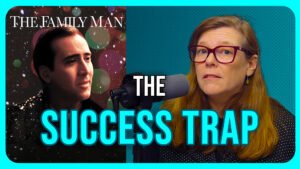
In this episode of the Full Mental Bracket podcast, Brent Diggs and Camille Diggs explore the movie psychology of The Family Man (2000) and what the film reveals about identity, ambition, relationships, sacrifice, and the different ways people define success.
At the center of the story is Jack Campbell, a wealthy Wall Street executive who wakes up inside an alternate version of his life — one built around marriage, children, responsibility, and community instead of status and money. What begins as a fantasy premise slowly becomes a deeper exploration of relational wealth, meaning, and the tension between achievement and connection.
In This Episode:
✅ Why success can still feel empty when it lacks meaning
✅ The difference between status wealth and relational wealth
✅ How relationships reshape identity over time
✅ Why sacrifice and struggle often create deeper meaning
✅ Why community and family create forms of wealth money cannot replace
This Episode Is for You If…
✅You feel torn between ambition and relationships
✅ You wonder whether success is costing you something important
✅ You struggle with defining what a meaningful life actually looks like
✅ You feel pressure to pursue status even when it leaves you empty
✅ You are rethinking what “winning” in life really means
Sign up for our newsletter for more tips, episodes, and other happenings at FMB


Episode Summary
The Family Man presents two versions of the same person built from one different decision.
In one life, Jack chooses career ambition and becomes wealthy, powerful, and isolated. In another, he chooses relationship, family, and responsibility. When he is forced to experience that alternate path firsthand, he begins confronting questions he has spent years avoiding.
What makes the film psychologically powerful is that neither life is presented as effortless. The family life includes sacrifice, financial stress, and lost opportunities. But over time, Jack begins to realize that struggle itself can create meaning — especially when it is tied to people, responsibility, and shared purpose.
The episode explores how definitions of success are often inherited from culture, how identity changes through repeated choices, and why people sometimes pursue status at the expense of the relationships that actually make life meaningful.
Timestamps:
⏳00:00 – What Success Actually Looks Like – Money, status, and competing definitions of wealth
⏳13:47 – Changing Your Values is Not Easy – Temper tantrum in the department store
⏳20:59 – Why Relationships Change People – Marriage, sacrifice, and relational wealth
⏳24:38 – How Struggle Creates Meaning – Why difficult lives can still feel deeply fulfilling
⏳26:20 – The Life Everyone Else Envies – Community, family, and redefining success
⏳30:58 – The Family Man Ending Explained – Second chances, life direction, and choosing what matters
What This Episode Reveals:
Here’s what sits underneath the story:
The Family Man’s View of Success and Meaning
Jack’s original life looks successful from the outside. He has money, status, influence, and freedom. But he is also isolated. His relationships are shallow, his life revolves around transactions, and no one truly depends on him.
The film contrasts that version of success with a life built around family, responsibility, and shared struggle. It is harder in many practical ways, but emotionally richer and more connected.
That tension is what makes the story resonate.
The Family Man and Relational Wealth
One of the central ideas in the film is that relational wealth is still wealth.
Jack keeps assuming his wife must secretly resent their middle-class life because he measures success through money and status. But Kate values connection, family, meaning, and shared history far more than prestige.
The movie challenges the assumption that achievement automatically creates fulfillment. Sometimes the life other people envy is not the glamorous one.
Confidence Doesn’t Equal Accuracy
One of the most misleading aspects of cognitive bias is how convincing it feels.
Your first answer often comes with a sense of certainty, even when it’s incomplete. That confidence can prevent you from questioning your assumptions or looking deeper.
This is why people can repeat the same mistakes—financially, relationally, or professionally—while feeling justified each time.
How Your Decisions Shape Identity Over Time
At its core, The Family Man is about trajectory.
One decision at an airport leads toward two entirely different versions of the same person. Over time, repeated choices build different identities, priorities, habits, and emotional worlds.
The film uses fantasy to explore a very real psychological question: What kind of person are your current choices shaping you into?
Key Takeaways
The real power of The Family Man is not the alternate timeline.
It is the realization that success without connection can still feel empty.
Money, status, and achievement matter. But relationships, responsibility, and shared meaning create forms of wealth that cannot be replaced once they are lost.
The life that looks smaller from the outside may sometimes be the richer one.
[🧠]
Resources Mentioned and Recommended Episodes:
- EP023 – The Family Pattern That Keeps You Stuck | Back to the Future Psychology
- EP021 – The “Success Trap” Nobody Talks About (Pixar’s Cars)
- Essay – Meaning Over Time
Listen & Subscribe
🎧 Listen now to explore The Family Man through the lens of psychology, storytelling, relationships, identity, and personal transformation.
Sign up for our newsletter for more tips, episodes, and other happenings at FMB
 Spotify
 Apple Podcasts
 YouTube
 Pandora
 iHeartRadio
 Amazon Music
 Overcast
Brent A. Diggs is the host of the Full Mental Bracket podcast, where psychology and storytelling are used to examine how people make decisions, handle responsibility, and shape the direction of their lives.
Each episode focuses on the kinds of situations people get stuck in—uncertain choices, pressure, strained relationships—and what it looks like to respond to them in a way that actually moves your life forward.
Learn more about the Narrative Ownership framework behind these ideas here.