The Powerful Psychology of The Shawshank Redemption – with Justin Varughese
EP019
Apple Podcasts – Spotify – Amazon Music – iHeart
Have you ever felt trapped in a life you didn’t choose—where even hope feels dangerous?
The Shawshank Redemption isn’t just a prison movie. It’s one of the most powerful psychological stories ever told about hope, freedom, and control.
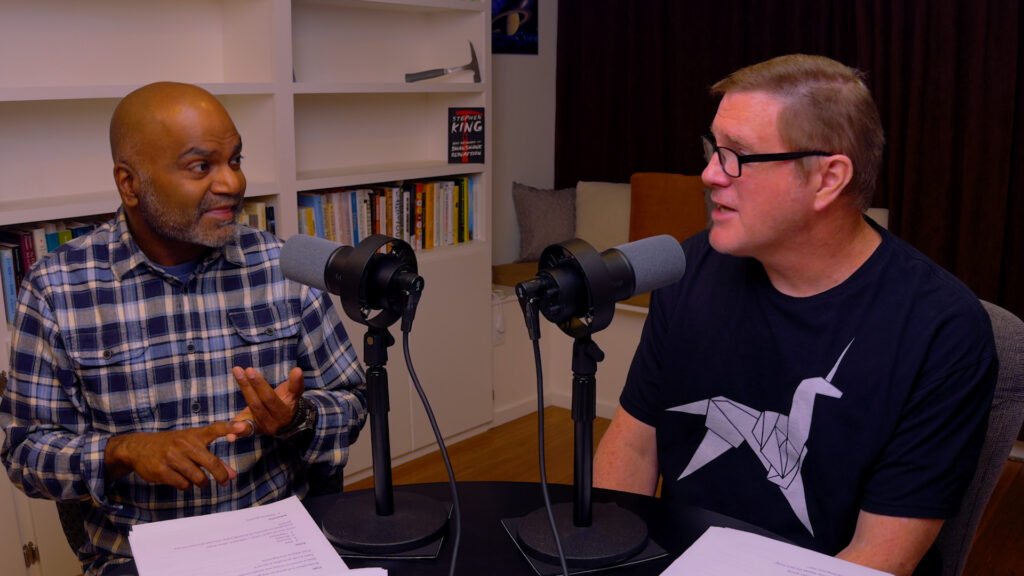
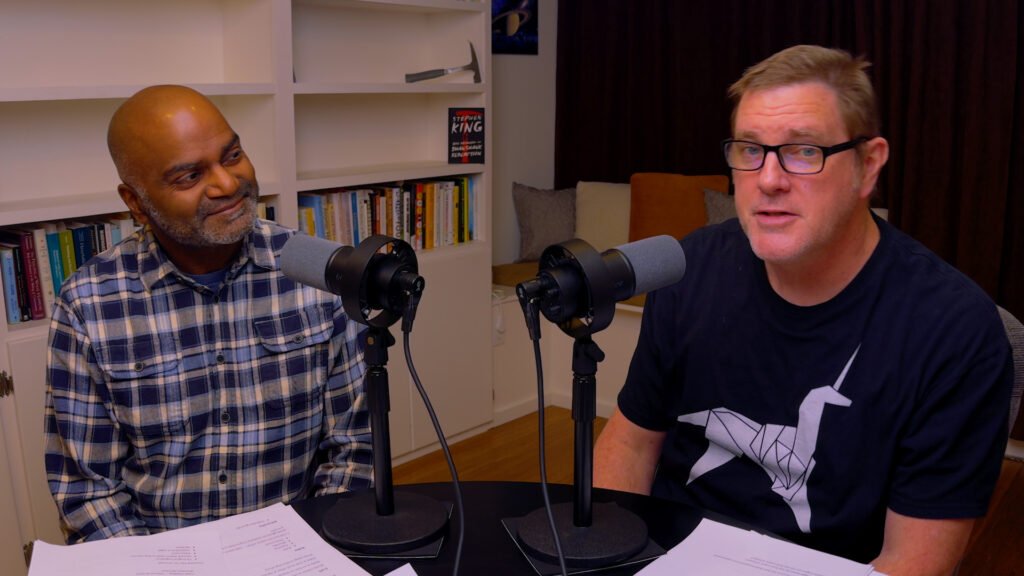
In this episode of The Full Mental Bracket, Brent Diggs is joined by Justin Varughese to break down The Shawshank Redemption through the lens of psychology, storytelling, and personal transformation—revealing why this film resonates so deeply with anyone who’s ever felt stuck, powerless, or written off.
In This Episode, We Explore::
✅ Locus of control and how believing you have no agency becomes its own prison
✅ Hope vs. survival—and why hope feels risky in oppressive environments
✅ Andy Dufresne as a quiet catalyst character who transforms everyone around him
✅ Institutionalization, dysfunctional comfort zones, and why freedom can feel terrifying
✅ How meaning, purpose, and service create inner freedom—even when circumstances don’t change
Using the narrative growth framework, we trace Andy’s arc from unjust imprisonment to legacy-building—and examine why The Shawshank Redemption speaks so powerfully to people navigating seasons of adversity, injustice, or loss of control.
This Episode Is for You If…
✅ You feel stuck in a life you didn’t choose and aren’t sure how to regain control
✅ You’ve been doing everything “right” but still feel boxed in by circumstances
✅ Hope feels naïve, risky, or dangerous after disappointment or loss
✅ You’re navigating midlife, transition, or a second-half reset and questioning what freedom really means
✅ You’re drawn to psychology, storytelling, and personal transformation
✅ You suspect the real prison isn’t your situation—but the beliefs you’ve adopted about it
Sign up for our newsletter for more tips, episodes, and other happenings at FMB
Timestamps:
⏳ 00:00 – Intro: Feeling Trapped in a Life You Didn’t Choose
———>Why The Shawshank Redemption resonates with anyone who feels stuck or powerless
⏳ 02:29 – Locus of Control: Who’s Actually Running Your Life?
———> Internal vs. external locus of control and the psychology of agency
⏳ 05:58 – When the Old Rules Stop Working
———>How injustice forces a rewrite of your life story
⏳ 08:16 – Losing Control and the Illusion of Safety
———>Why false stability keeps people stuck
⏳ 14:11 – The Hero’s Journey Begins: Andy Dufresne’s First Move
———>The call to adventure inside an oppressive system
⏳ 21:08 – Hope vs. Survival: Andy Dufresne vs. Red
———>Two belief systems that shape freedom and identity
⏳ 26:06 – Institutionalization and Dysfunctional Comfort Zones
———>Why freedom can feel more terrifying than prison
⏳ 32:03 – Hope Is Long Work
———> Why transformation requires patience, meaning, and endurance
⏳ 33:54 – Fate vs. Hope: The Rope and the Compass
———> How belief systems determine life outcomes
⏳ 35:53 – Power, Control, and the Warden’s Moral Hypocrisy
———> What Shawshank reveals about corrupted authority
⏳ 40:14 – The Invitation to Hope: Andy’s Letter
———> Meaning, purpose, and inner freedom
⏳ 24:09 – Takeaways: Hope, Agency, and Personal Freedom
———> What The Shawshank Redemption teaches us about change
What This Episode Reveals:
Here’s what this episode helps us understand more deeply:
Hope vs survival
Shawshank points out a distinction we often miss: survival and hope are not the same thing. Survival is about protection — how not to get hurt. Hope involves risk: the courage to live beyond your fear.
Most of the characters in Shawshank focus on survival. They learn the routines. Stay inside the lines. Don’t make waves. At first, that looks like wisdom. Over time, it turns into settling — this is as good as it’s going to get.
Andy refuses to settle. Not because he’s reckless, but because he won’t let the prison define him. His hope isn’t about escape, at least not at first. It’s about meaning — small reminders that you’re still human.
Red takes the opposite approach. He survives by avoiding hope altogether. What changes him isn’t an argument, but relationship. Andy’s hope draws people in.
Survival keeps you alive. Hope keeps you oriented. And without other people around you, hope either fades or turns into fantasy.
Institutionalization and Comfortable Dysfunction
One of the quiet dangers in Shawshank prison isn’t cruelty — it’s a broken sense of comfort. Familiar rules. Predictable days. A system you know how to survive inside of.
That’s what institutionalization really is. It’s not just being controlled. It’s learning to get comfortable in the cage. Brooks doesn’t fall apart because he’s weak. He falls apart because he’s forgotten how to handle the responsibilities of freedom.
This kind of comfort feels safe. You adapted. You endured. But adaptation without growth quietly turns into surrender. The Shawshank Redemption isn’t saying rules are necessarily bad. It’s showing what happens when safety replaces purpose.
Locus of Control: Agency Within Constraint
In psychology, locus of control refers to the degree to which people believe they influence the events of their lives. People with an internal locus see outcomes as largely shaped by their own effort and choice; those with an external locus tend to see forces beyond their control as dominating their lives. Shawshank shows this contrast vividly.
Andy nurtures and maintains his inner agency even when his every external circumstance is locked down. Others adapt to these constraints by surrendering their hope — a coping mechanism that keeps them trapped long after their bodies are free. This isn’t about cheap platitudes; it’s about how belief structures shape your narrative agency even inside the most challenging constraints.
Shawshank isn’t just about prison life. It’s about what happens when people slowly trade agency for safety, meaning for routine, relationship for self-protection.
All powerful lessons for us today.
It doesn’t romanticize suffering, and it doesn’t sell easy hope. It asks a harder question: What kind of person are you becoming while you’re waiting for things to change?
Because in the end, freedom isn’t only about leaving the walls behind. It’s about whether you learned how to live before the door ever opened.
[🧠]
If life feels claustrophobic, unfair, or beyond your control, this conversation will challenge how you think about freedom—and remind you why hope may be the most subversive force there is.
“Hope is a good thing. Maybe the best of things. And no good thing ever dies.”
Resources Mentioned:
- Ep017 – What Is Locus of Control? How to Stop Feeling Powerless & Take Back Your Life
- EP016 – What is the Try-Fail Cycle? – (more on growing through adversity)
- Ep012 – Marriage of Growth: Beyond Happily Ever After (more on incremental growth)
- The Shawshank Redemption – film site
And check out our take on – The Princess Bride – (it’s bursting with growth mindset!)
Listen & Subscribe
🎧 Listen now to take a deep dive into locus of control, hope, and personal agency—using The Shawshank Redemption as a masterclass in psychological freedom.
Sign up for our newsletter for more tips, episodes, and other happenings at FMB
 Spotify
 Apple Podcasts
 YouTube
 Pandora
 iHeartRadio
 Amazon Music
 Overcast
Brent A. Diggs is the host of the Full Mental Bracket podcast, where psychology and storytelling are used to examine how people make decisions, handle responsibility, and shape the direction of their lives.
Each episode focuses on the kinds of situations people get stuck in—uncertain choices, pressure, strained relationships—and what it looks like to respond to them in a way that actually moves your life forward.
Learn more about the Narrative Ownership framework behind these ideas here.