/
Hedonic Adaptation and Hedonic Treadmill
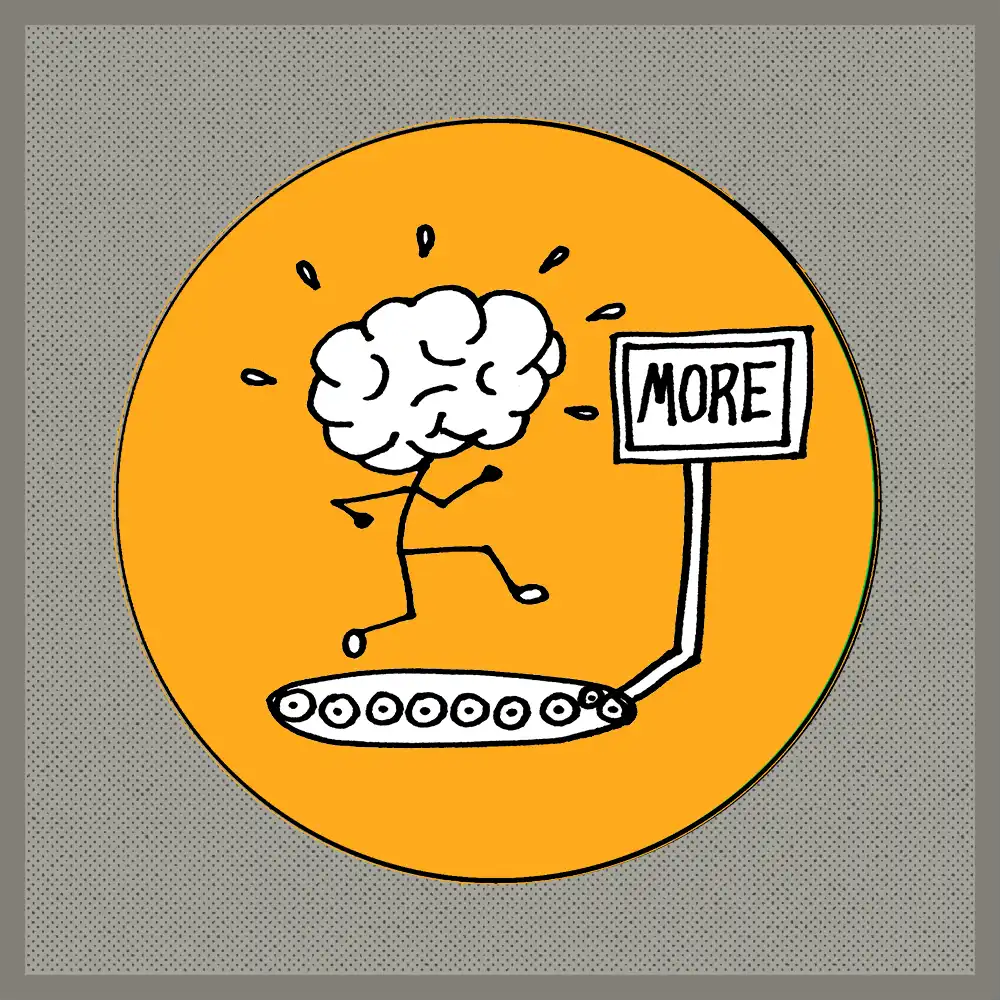
What is Hedonic Adaptation?
Hedonic adaptation refers to the idea that people have an emotional setpoint, like a thermostat that they will eventually return to no matter how positive (or negative) their circumstances become.
The Hedonic Treadmill Effect
Hedonic adaptation explains why positive events or pleasures quickly wear off and become less satisfying as time goes on. This leads to an effect called the hedonic treadmill where an ever-increasing amount of amount temporary pleasures – such as food, purchases, or praise – are needed to stay at the same level of (hedonic) happiness.
In western society we often react to this fading of enjoyment by trying to increase our consumption, better control our environment, or other external measures. But these often backfire.
For example, eating your favorite meal every day is the fastest way to make it no longer your favorite meal. Binge-buying stuff burns though money, clutters your home, and eventually puts the fill in landfill. All while making you no happier in the long run. You can’t beat the treadmill, the only way win is to step off of it.
Hedonic Setpoint May Not Budge Much
To make things worse, research suggests that your happiness baseline may be mostly genetic. That situational factors like wealth and status contribute very little to your overall level of happiness. Dramatic events like winning the lottery or a severe illness will shift hedonic level, but not as much—and for not as long—as we imagine.
A Better Way to Find Fulfillment
A better idea is to realize that fleeting pleasures are by definition, fleeting. And balance those short-term wins with more satisfying long-term pursuits – such as mastery, growth, and building relationships – things that require effort and don’t have the same “feel-good now” response.
Related Concepts
✅ Hedonic happiness
✅ Eudaimonic happiness
✅ Hedonic setpoint
Mentioned in
✅ Episode 009 – Cultivating Gratitude: Overcoming Cognitive Biases for a Happier Life
✅ The Science of Gratitude: How to Overcome Negativity Bias & Cultivate Appreciation
✅ How to Cultivate Gratitude: Key Insights and Practical Steps for Daily Life
References
*️⃣ Brickman, P. D., & Campbell, D. T. (1971). Hedonic relativism and planning the good society.
*️⃣Mihaly Csikszentmihalyi, (1990). Flow: The psychology of optimal experience
*️⃣Lykken, D.T., & Tellegen, A. (1996). Happiness Is a Stochastic Phenomenon.
*️⃣APA Dictionary of Psychology
 Spotify
 Apple Podcasts
 YouTube
 Pandora
 iHeartRadio
 Amazon Music
 Overcast
Brent A. Diggs is the host of the Full Mental Bracket podcast, where psychology and storytelling are used to examine how people make decisions, handle responsibility, and shape the direction of their lives.
Each episode focuses on the kinds of situations people get stuck in—uncertain choices, pressure, strained relationships—and what it looks like to respond to them in a way that actually moves your life forward.
Learn more about the Narrative Ownership framework behind these ideas here.