The Family Pattern That Keeps You Stuck | Back to the Future Psychology with Andrew Chandler
EP023
Apple Podcasts – Spotify – Amazon Music – iHeart
Have you ever felt stuck repeating family patterns you did not choose?
Patterns around conflict. Passivity. Avoidance. Beliefs about what people like you do and do not become.
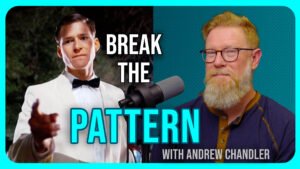
In this episode of The Full Mental Bracket, Brent Diggs is joined by Andrew Chandler to explore the psychology of Back to the Future and what the film reveals about family systems, learned helplessness, conflict avoidance, and becoming the protagonist of your own life.
What makes Back to the Future so powerful is that beneath the time-travel story, it is really about inherited patterns. George McFly has spent years adapting to humiliation and passivity. Marty steps into the past and accidentally disrupts the family script, creating the conditions for change.
This conversation explores why that story still resonates so strongly today.
In This Episode:
✅ How family patterns shape identity across generations
✅ Why George McFly represents learned helplessness
✅ How avoidance becomes an invisible prison
✅ Why Biff thrives on passivity and repeated behavior patterns
✅ How Marty works as a catalyst character
✅ Why you do not need a time machine to start changing your future
This Episode Is for You If…
✅ You feel stuck in patterns you learned from your family
✅ You struggle with conflict avoidance or passivity
✅ You can see inherited beliefs shaping your choices
✅ You spend more time regretting the past than acting in the present
✅ You enjoy movie psychology, storytelling, and personal growth
✅ You want to understand how change actually begins
Sign up for our newsletter for more tips, episodes, and other happenings at FMB


Episode Summary
Back to the Future is often remembered as a fun time-travel classic, but it also works as a story about family dynamics and personal agency.
George McFly has learned to avoid conflict, accept humiliation, and live as if resistance is pointless. Over time, that passivity shapes the whole family. Marty grows up inside that emotional environment, even if he has not fully become it yet.
When Marty is sent back to 1955, he does more than disrupt the timeline. He interrupts a family pattern. In trying to get home, he ends up pushing George toward a moment of courage that changes the trajectory of the McFly family.
This episode explores why that shift matters, what the movie gets right about avoidance and helplessness, and how small present-day decisions can reshape the future.
Timestamps:
⏳00:00 – Family Patterns and Feeling Stuck
———–>How inherited beliefs shape behavior and identity
⏳02:02 – Why Back to the Future Resonates Psychologically
———–>What the story reveals about patterns and change
⏳07:40 – Limiting Beliefs and Family Identity
———–>How “No McFly has ever amounted to anything” shapes behavior
⏳10:59 – Learned Helplessness in the McFly Family
———–>Passivity, avoidance, and adaptation over time
⏳15:50 – Conflict Avoidance and the Invisible Trap
———–>Why people stay in unhealthy dynamics
⏳20:20 – Disrupting Patterns Through Action
———–>How change begins inside existing systems
⏳24:57 – Why Change Cannot Be Outsourced
———–>The limits of coaching and external motivation
⏳26:47 – Identity Change Through Decisive Action
———–>What happens when behavior finally shifts
⏳32:44 – Why You Don’t Need to Fix the Past
———–>How present decisions shape the future
⏳47:26 – Becoming the Protagonist of Your Life
———–>Responsibility, direction, and long-term growth
What This Episode Reveals:
Here’s what sits underneath the story:
Family Patterns Shape Behavior Over Time
At the center of Back to the Future is not just time travel. It is the question of whether a family story can change.
The McFly family has adapted to fear, conflict avoidance, and powerlessness. George’s passivity does not affect only him. It shapes the whole household. Everyone learns to live around it. Everyone adjusts to it. Over time, the pattern starts to feel permanent.
That is part of why the film feels familiar. Many people grow up with inherited patterns they did not choose but still have to deal with.
Learned Helplessness Creates Passive Identity
George is not simply timid. He has been conditioned into passivity.
He expects confrontation to go badly. He assumes resistance will fail. He avoids action because he no longer believes action will matter. That is why his character fits the idea of learned helplessness.
Biff does not control George only through strength. He controls him through repetition. George has adapted to being dominated, and that adaptation becomes his identity.
The movie exaggerates this for storytelling, but the pattern is real. People can get used to avoiding pain to the point that they organize their lives around not confronting what needs to be confronted.
You Don’t Need to Fix the Past to Change Direction
The emotional pull of Back to the Future comes partly from a familiar idea: the desire to go back and fix something.
A different decision. A different conversation. A different response at a moment that mattered.
But the deeper point is not about changing the past. It is about recognizing that present choices still shape what comes next.
You may not get to rewrite old moments. But you still influence the direction of your life now. That is where agency begins.
You do not need a time machine to build a different future. You need clarity, courage, and a willingness to stop repeating what no longer serves you.
Key Takeaway
The real power of Back to the Future is not the DeLorean. It is the reminder that family patterns are strong, but they are not final.
People can inherit passivity, avoidance, and limiting beliefs. They can also interrupt them.
Real change usually does not happen all at once. It happens when someone stops waiting for rescue and starts acting differently in the present.
[🧠]
You don’t really need a time machine in order to build a better future.
Resources Mentioned and Recommended Episodes:
- Andrew Chandler
- Taylor Flails – book by Andrew Chandler
- EP017 – What Is Locus of Control? How to Stop Feeling Powerless & Take Back Your Life
- EP019 – The Belief That Keeps You Stuck (Shawshank Redemption Explained)
- EP020 – The Slanted Brain: How Bias Shapes How You See The World
Listen & Subscribe
🎧 Listen now to explore Back to the Future through the lens of psychology, storytelling, family systems, and personal transformation.
Sign up for our newsletter for more tips, episodes, and other happenings at FMB
 Spotify
 Apple Podcasts
 YouTube
 Pandora
 iHeartRadio
 Amazon Music
 Overcast
Brent A. Diggs is the host of the Full Mental Bracket podcast, where psychology and storytelling are used to examine how people make decisions, handle responsibility, and shape the direction of their lives.
Each episode focuses on the kinds of situations people get stuck in—uncertain choices, pressure, strained relationships—and what it looks like to respond to them in a way that actually moves your life forward.
Learn more about the Narrative Ownership framework behind these ideas here.